
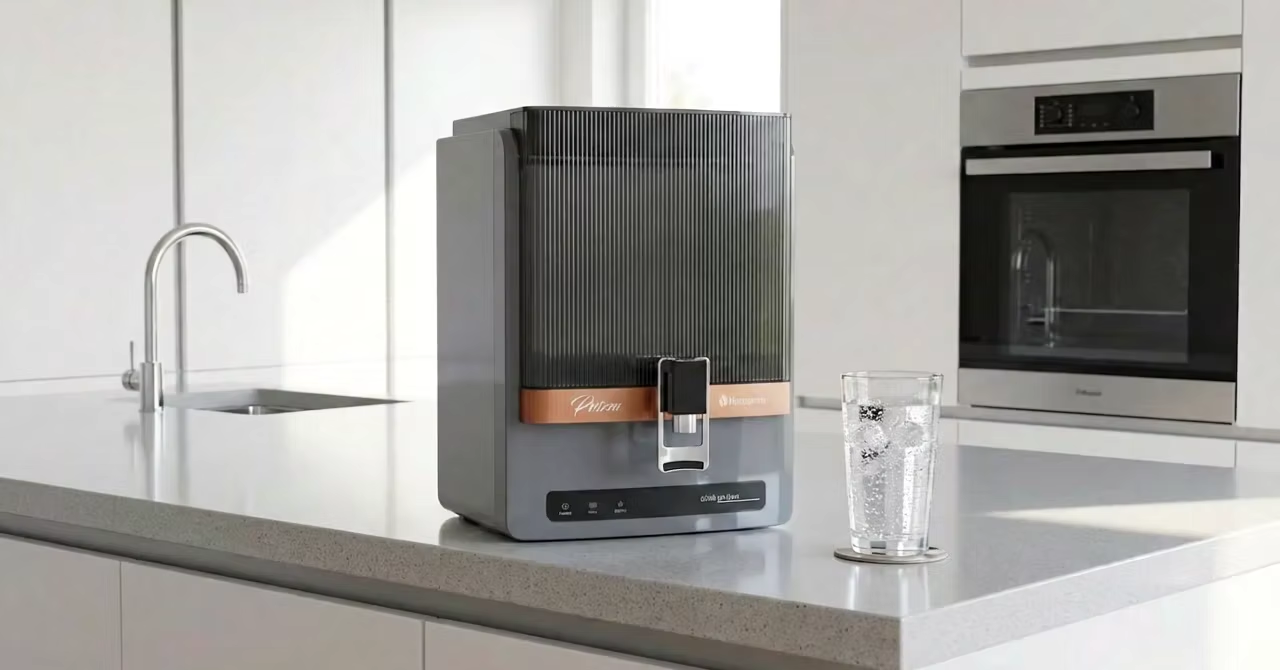
How Should You Choose an RO for High TDS Water?
Choosing an RO for high-TDS water should start with your actual water source and measured TDS level, not with a single “best” model. Borewell, tanker, municipal, and mixed supplies can behave differently, and purifier suitability varies by model. Check the source water, TDS, family usage, storage need, purification technology, filter-life conditions, and warranty terms before deciding.
What TDS Range Should You Check Before Choosing an RO?
Before choosing an RO, measure the TDS of your source water with a reliable TDS meter. TDS helps indicate the dissolved-mineral load, but it should not be treated as a complete water-safety test. Purifier suitability should be checked together with the water source, sediment, taste, smell, and other site conditions.
Which Hectapure Model Suits Which TDS and Water Source?
Hectapure models are designed for different water conditions, so the highest supported TDS should not be used as the only selection criteria.
- ✓Soliv — up to 1500 ppm under normal usage conditions
- ✓Blitz — up to 1500 ppm under normal usage conditions
- ✓Swift — up to 1500 ppm under normal usage conditions
- ✓ELXR — up to 2000 ppm under normal usage conditions
- ✓Prizm RO + UV — up to 2000 ppm under normal usage conditions
- ✓Prizm RO + Alkaline — up to 2000 ppm under normal usage conditions
- ✓Prizm UV + UF — designed for Govt. Supply Water / low-TDS treated supply
- ✓Orvia (UTC) — up to 2000 ppm under normal usage conditions
- ✓Mooner — up to 3000 ppm under normal usage conditions
What Should You Compare Before Buying an RO?
Two homes can have the same TDS reading but still need different purifier configurations because water source, sediment, usage, storage requirement, and maintenance conditions can differ. Use TDS as one input, then compare the practical factors below before choosing a model.
- ✓Water source: borewell, tanker, municipal, or mixed supply
- ✓Measured source-water TDS
- ✓Family size and daily drinking-water requirement
- ✓Storage capacity
- ✓Purification technology
- ✓Model-specific TDS suitability
- ✓Filter-life conditions
- ✓Warranty coverage
- ✓Installation space
- ✓Long-term service and ownership cost
Why Does Filter Life Matter?
Filter life affects long-term maintenance cost and service frequency. Hectapure’s current approved models are positioned for filter life of up to 24 months under normal usage conditions. Actual filter life can vary depending on water quality, TDS, sediment, usage volume, contamination level, and site conditions, so the 24-month figure should not be treated as an unconditional guarantee.
Why Is Warranty Clarity Important?
Warranty terms should be compared by coverage, not just by the headline number of years. Hectapure’s current warranty structure includes a 2-year unconditional warranty plus a 3-year extended warranty on the Pump and SMPS, subject to applicable warranty terms. For the extended Pump and SMPS coverage, the required filter-kit replacement conditions should also be checked before purchase.
When Should You Ask an Expert Before Buying?
Expert guidance is useful when your water source changes frequently, TDS is unusually high, or the water has smell, heavy sediment, visible contamination, or hardness-related issues. It is also worth asking for help if you are unsure about installation space, family usage, storage capacity, or which purifier model matches your actual water conditions.
How Should You Make the Final Choice?
The right RO for high-TDS water depends on the combination of source water, measured TDS, purification requirement, storage need, family usage, and maintenance conditions. Do not choose a purifier only because it supports the highest TDS value. Match the model to your actual water conditions, compare the warranty and filter-life terms carefully, and ask for expert confirmation when the water source or site conditions are unusual.
Not sure which RO is right for your water?
Use Find My RO or talk to a Hectapure expert to shortlist the right model based on TDS, water source, family size, and budget.